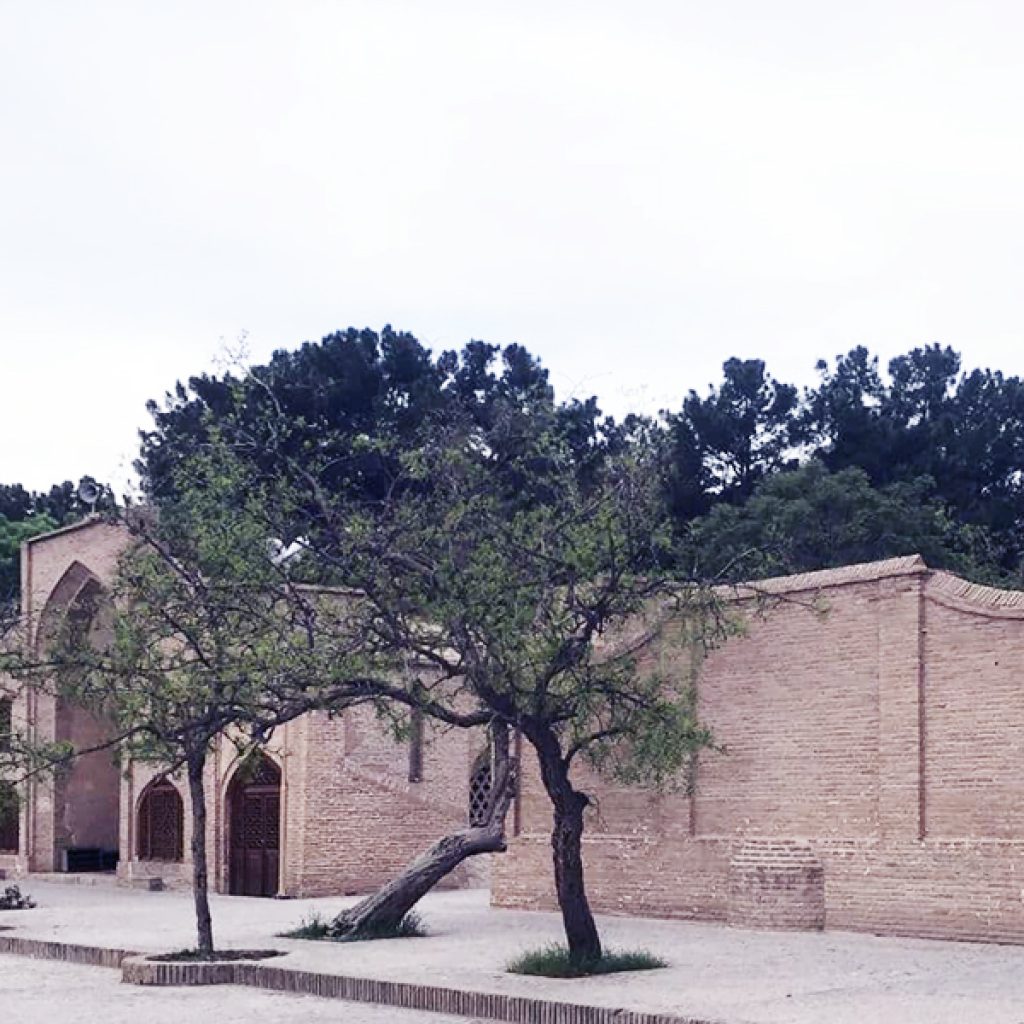
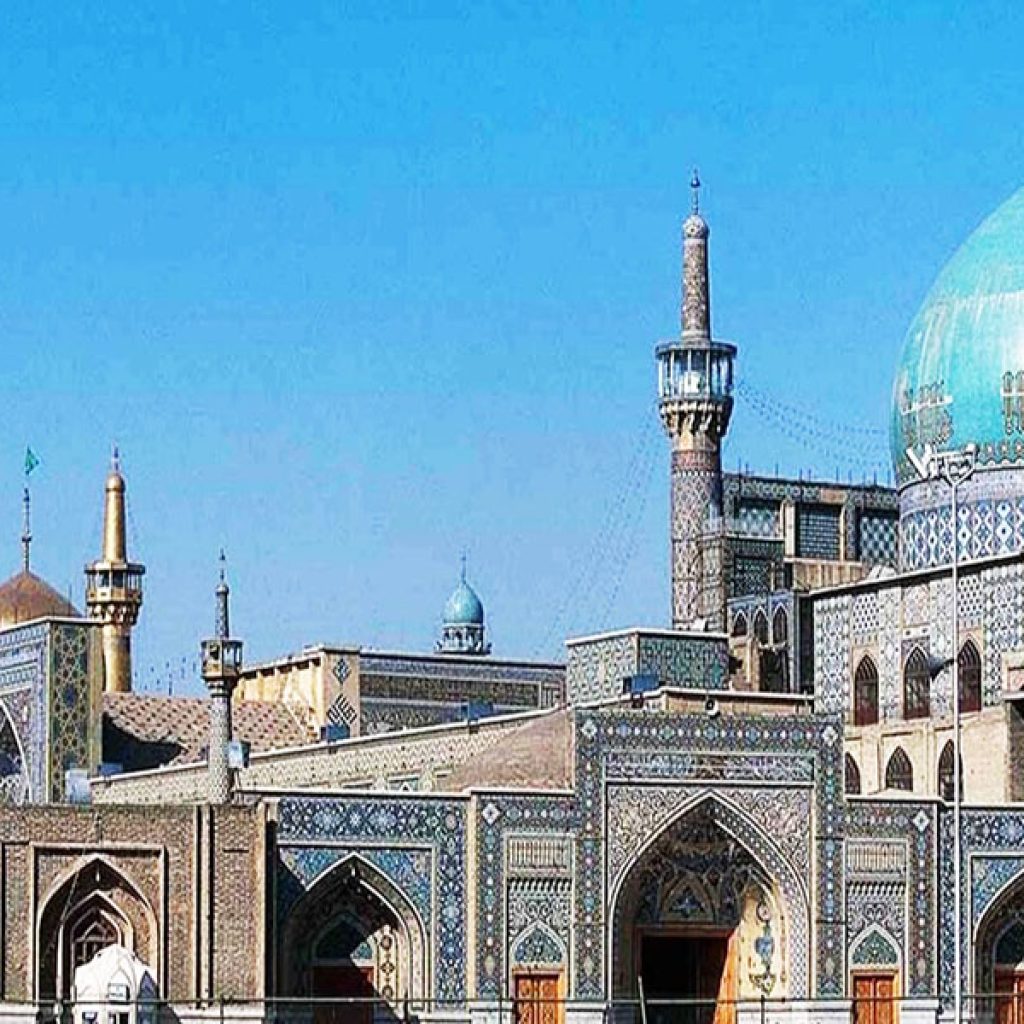
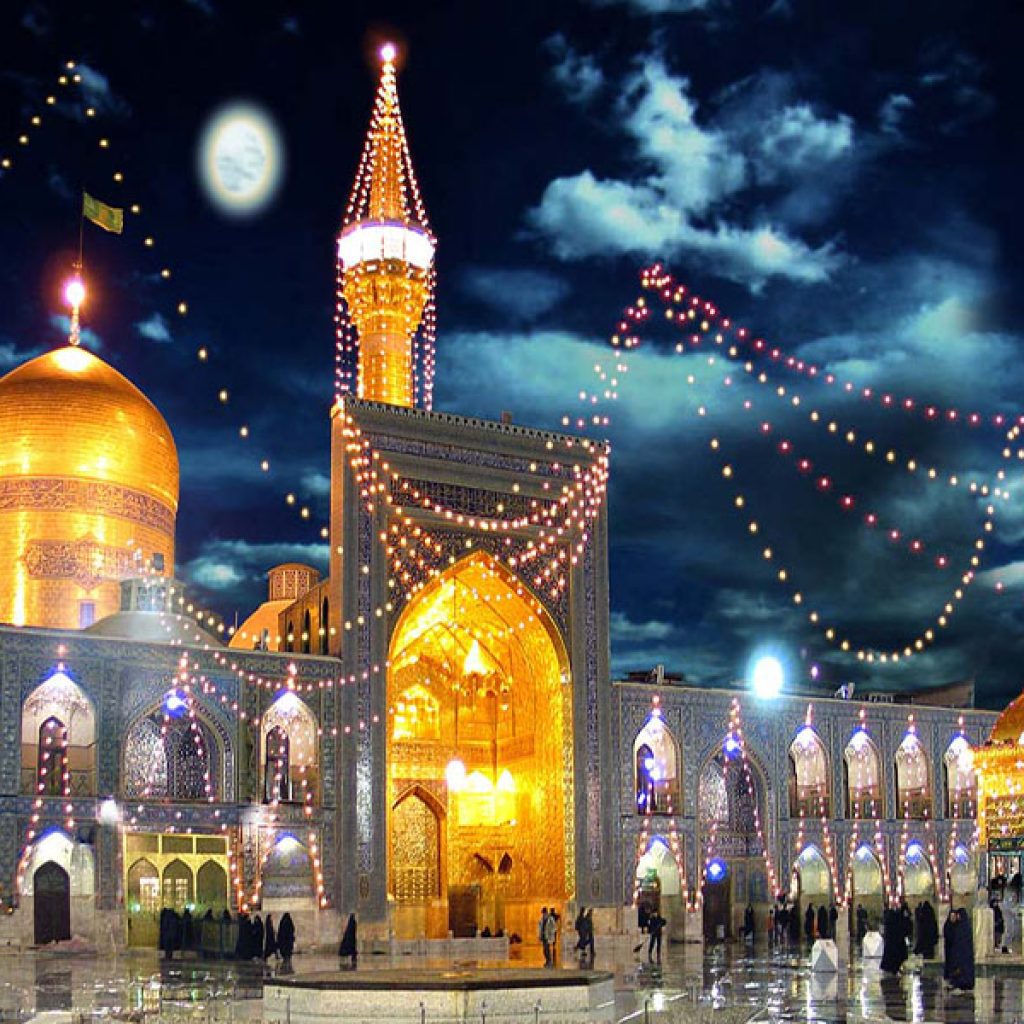
Imam Reza Holy Shrine Complex is an extensive religious and architectural complex in the heart of Mashhad, centered around the mausoleum of Imam Reza, the eighth Imam of Twelver Shia Islam. Developed over many centuries, the complex includes historic courtyards, mosques, schools, museums, a library, and other religious and cultural buildings. Among its most important monuments is the historic Goharshad Mosque, built during the Timurid period. The shrine has played a central role in the development of Mashhad and has profoundly influenced the city’s religious, social, cultural, and economic life.
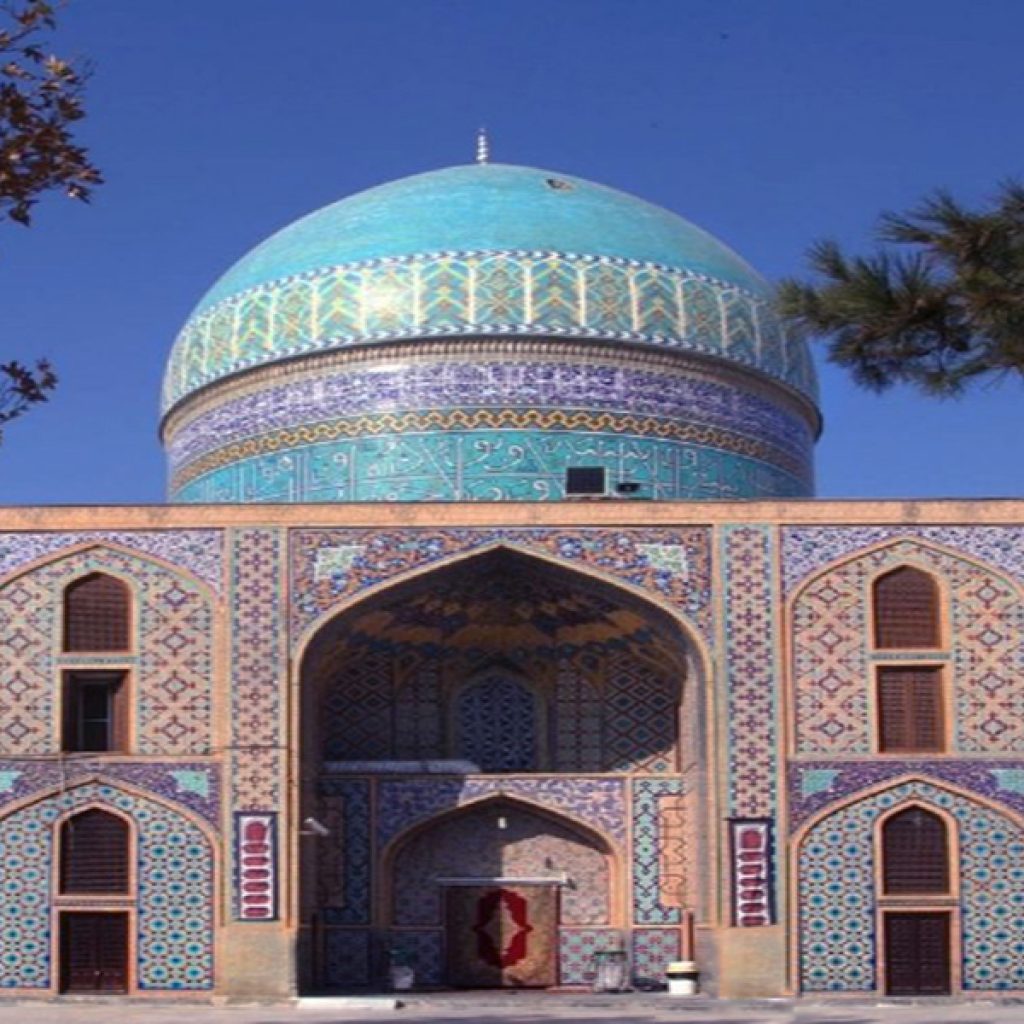
Goharshad Mosque, located within the Imam Reza Holy Shrine Complex, is one of the finest examples of Timurid architecture in Mashhad. Commissioned by Gowharshad Agha, wife of the Timurid ruler Shah Rukh, the mosque was built in the early 15th century and completed in 1418. Designed by the renowned architect Qewam al-Din Shirazi, it follows the traditional four-iwan plan and is distinguished by its imposing entrance iwan, twin minarets, and richly decorated tilework. The mosque’s intricate mosaic faience, glazed tiles, and ornamental details reflect the artistic achievements of the Timurid period.
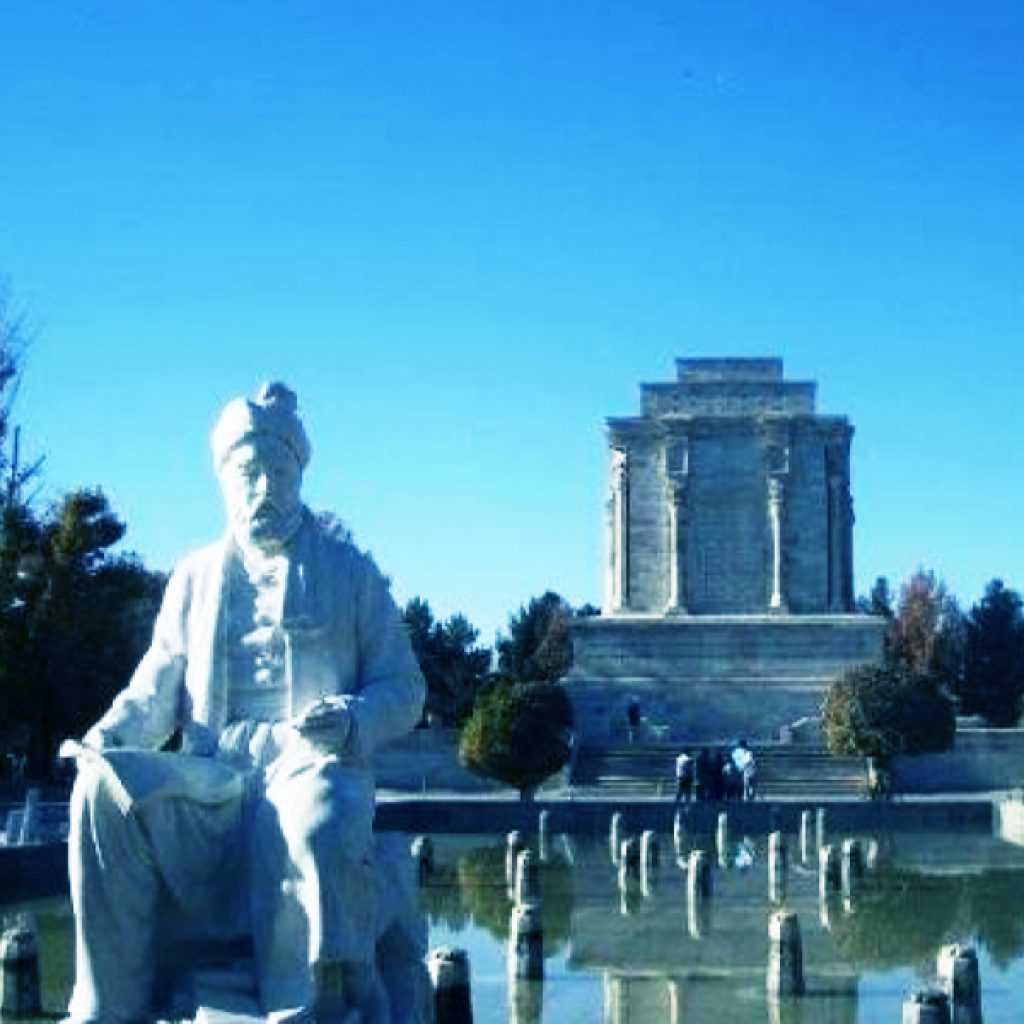
Tomb of Ferdowsi, located in the historic city of Tus near Mashhad, commemorates Abol-Qasem Ferdowsi, the celebrated Persian poet and author of the Shahnameh, the epic Book of Kings. The present mausoleum was built in the early 20th century and completed in 1934, with a design inspired by Achaemenid architecture and the Tomb of Cyrus the Great at Pasargadae. The monument stands within a spacious garden complex that also includes the Tus Museum and a library, making it an important cultural destination for visitors interested in Persian literature and Iranian history.
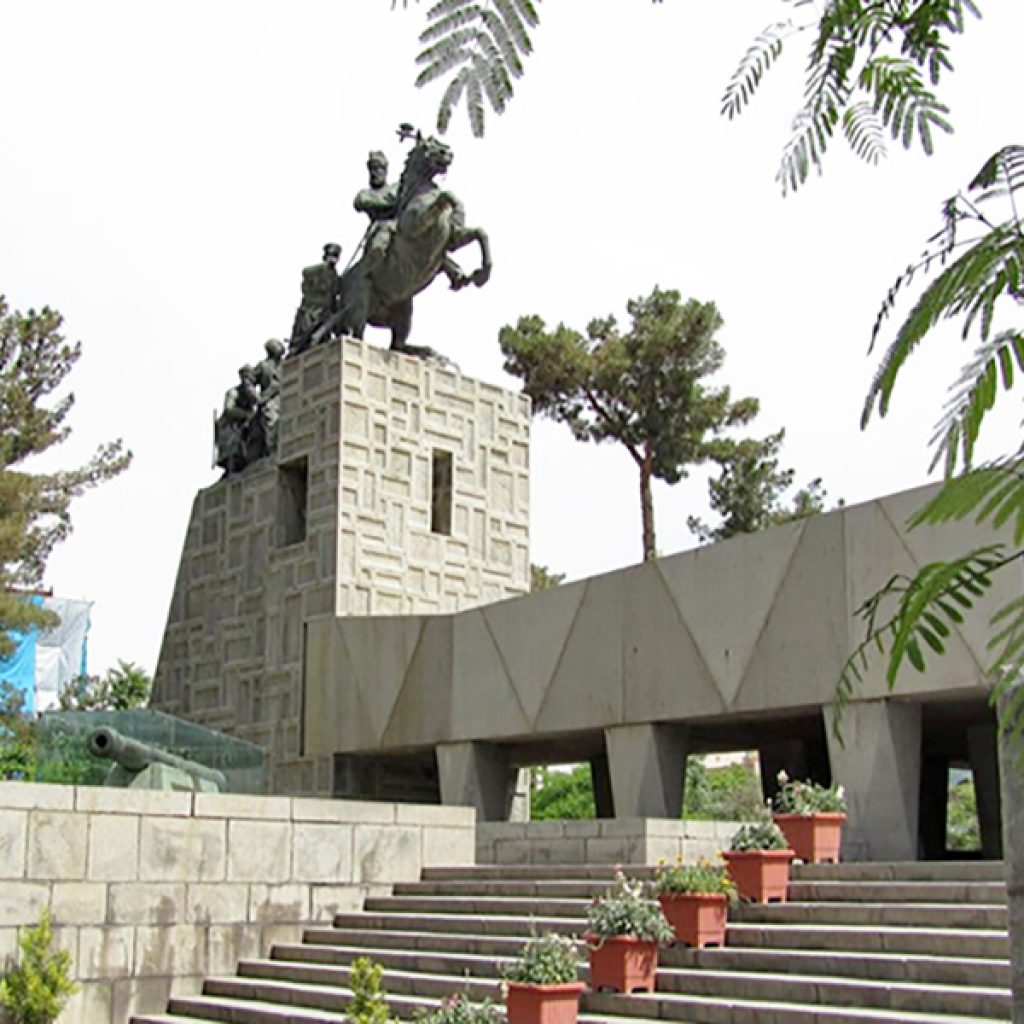
Nader Shah Afshar’s Tomb, located in the Naderi Garden Museum in central Mashhad, commemorates Nader Shah Afshar, the founder of the Afsharid dynasty. The present mausoleum was designed by the renowned Iranian architect Houshang Seyhoun and completed in 1963. Its modern design combines geometric forms with rough granite stone, while the open tomb chamber is covered by a structure inspired by a nomadic tent. A monumental bronze sculpture of Nader Shah on horseback, accompanied by three soldiers, stands above the tomb and was created by the celebrated Iranian sculptor Abolhassan Sedighi. The complex also includes a museum displaying artifacts related to Nader Shah and the Afsharid period.
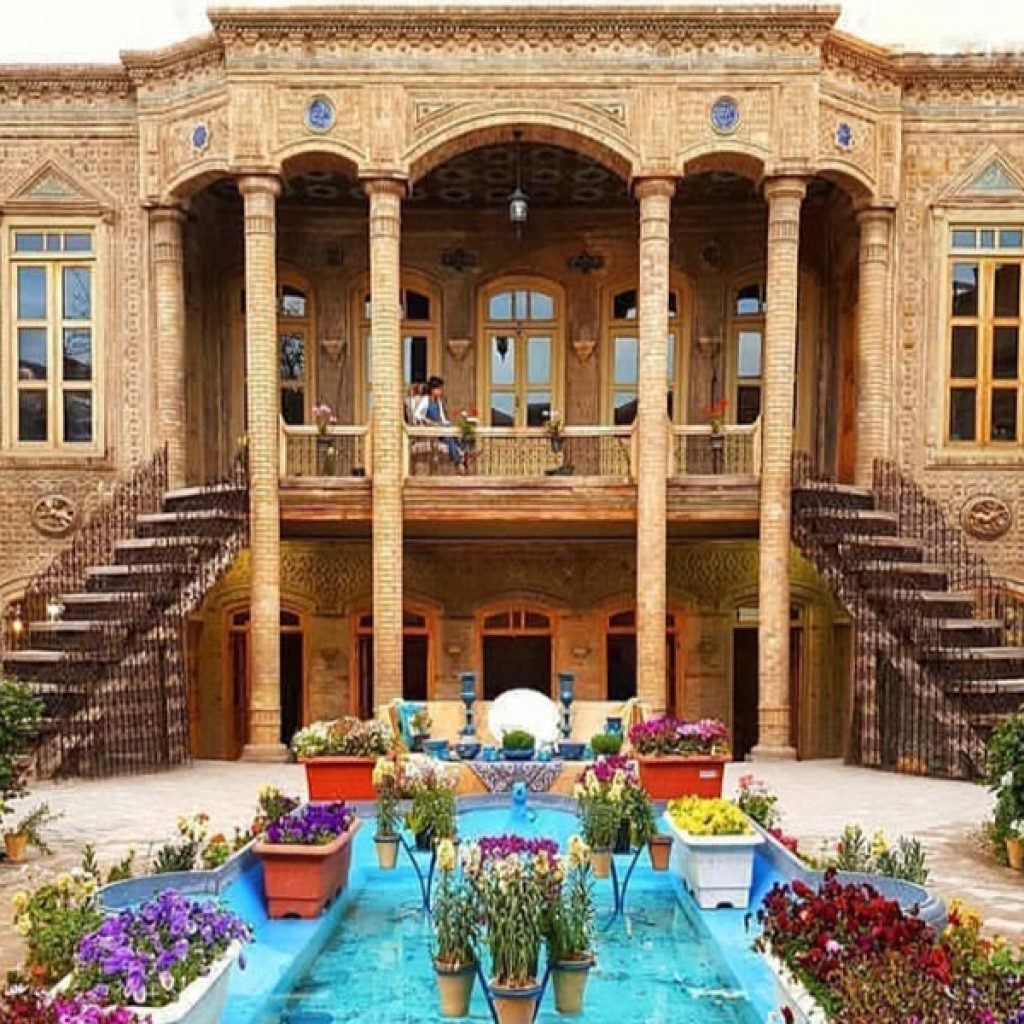
Darougheh Historical House is a late-Qajar residence in the historic center of Mashhad, commissioned by Yousef Khan Herati, the city’s darougheh, or police chief. Built with the involvement of Russian architects, the house combines traditional Iranian residential architecture with Russian influences. Its central courtyard, two-sided staircases, brickwork, colorful tilework, wood decorations, and plaster ornamentation reflect this distinctive architectural blend. Today, Darougheh House is a registered national heritage site and one of Mashhad’s notable historic residences.
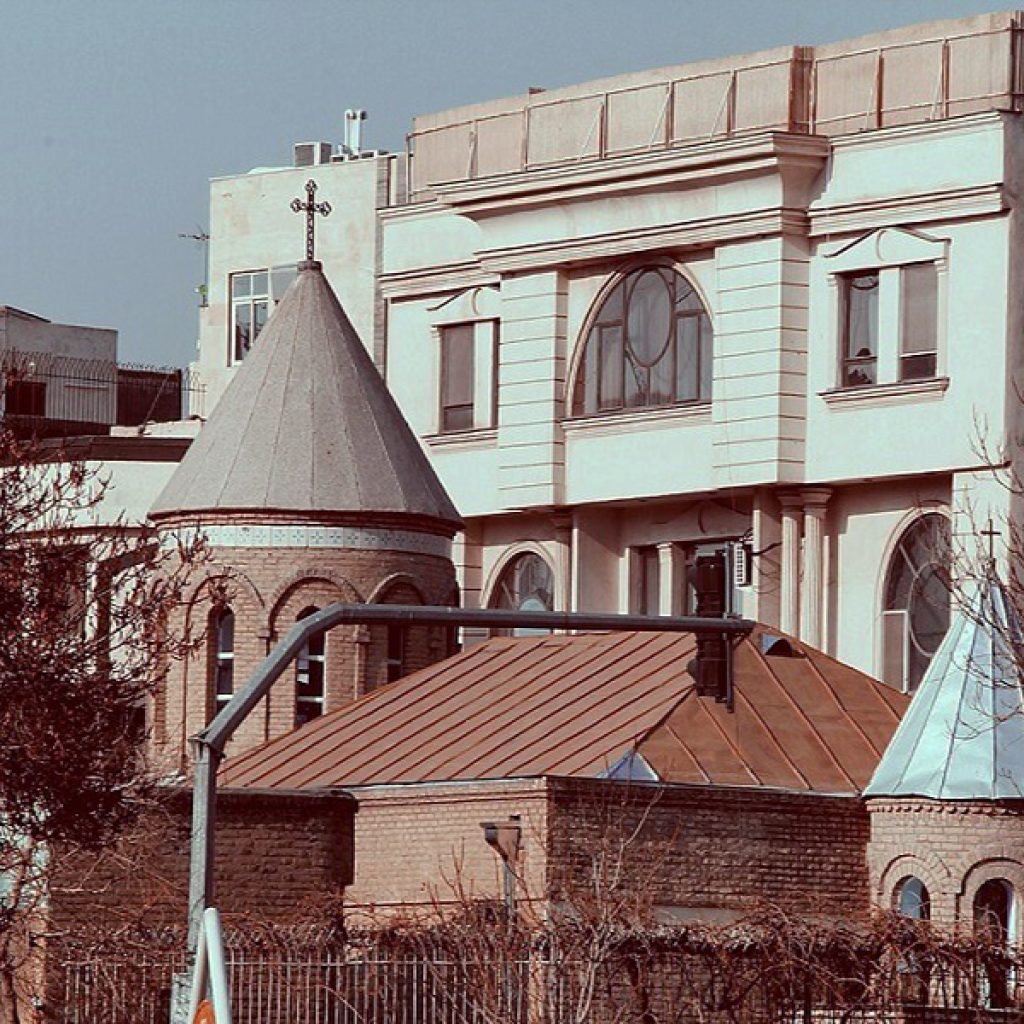
Saint Mesrop Armenian Church is a historic Armenian church in Mashhad, built in 1941 by the Armenian community of the city. The church reflects Armenian architectural traditions alongside local Iranian influences and was once an important religious and social center for Mashhad’s Armenian community. Following the migration of many Armenian residents from Mashhad, the church gradually ceased its regular activities. In recent years, the building has been reported as abandoned and closed to the public, although it remains a notable reminder of the city’s Armenian heritage.
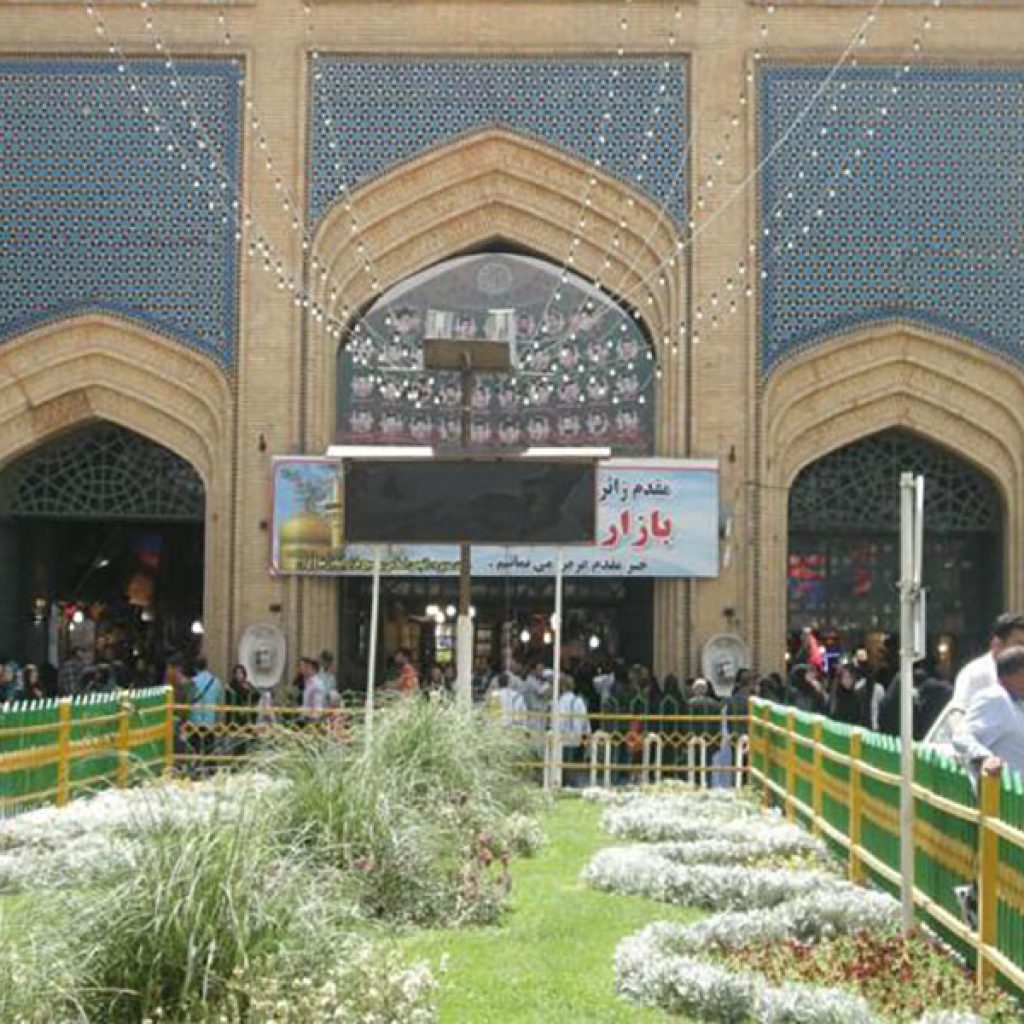
Bazar Reza, located near the Imam Reza Holy Shrine in Mashhad, is a traditional covered bazaar and one of the city’s main shopping destinations for pilgrims and visitors. Built in 1976, the bazaar was designed to replace parts of the old market that were demolished during the expansion of the shrine complex. Stretching between Beit al-Moqaddas Square and 17 Shahrivar Square, it consists of two levels and 1,711 shops arranged along covered corridors and traditional market spaces. Visitors can find a wide range of Mashhad souvenirs, including saffron, spices, turquoise and other semi-precious stones, jewelry, traditional sweets, perfumes, prayer items, and handicrafts. The upper level also includes small workshops where traditional crafts such as turquoise cutting, jewelry making, and embroidery can be seen.
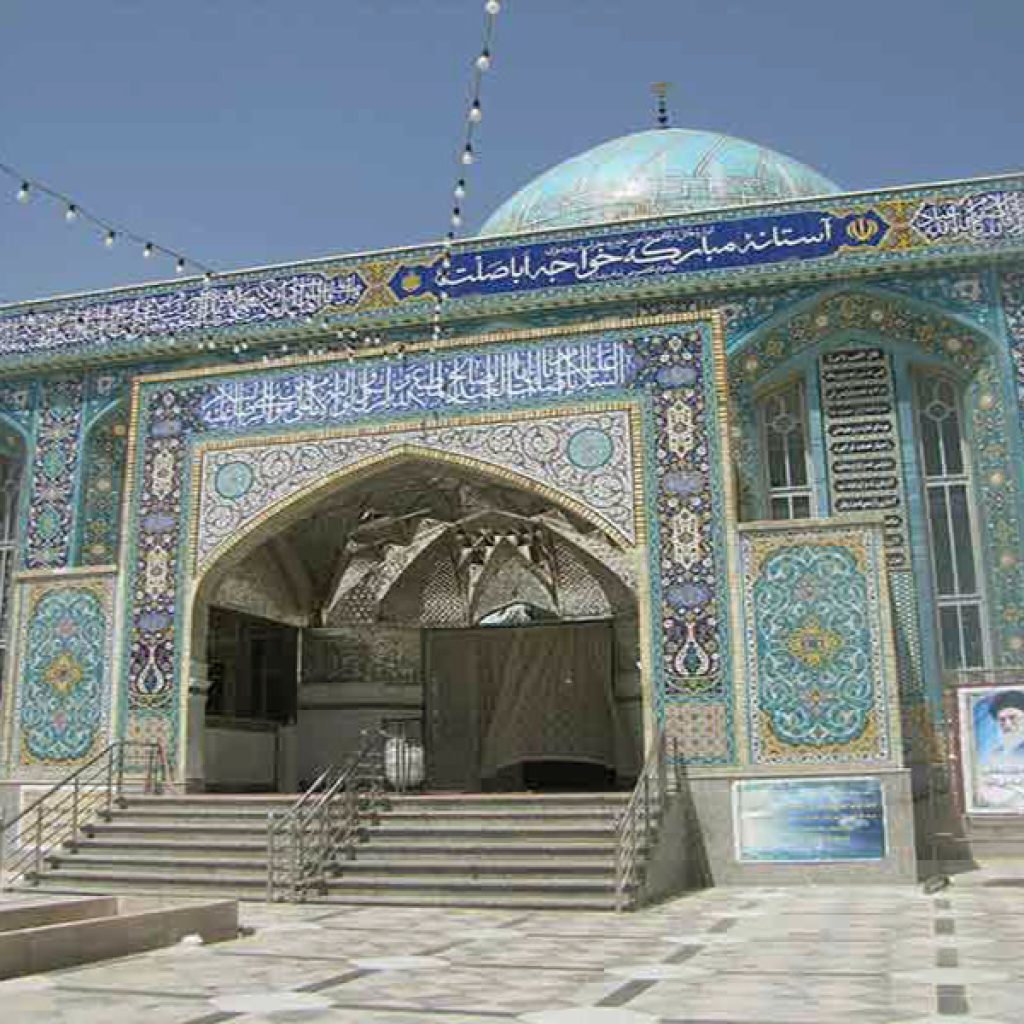
Khajeh Aba Salt Shrine, located along the Mashhad–Fariman Road southeast of Mashhad, is the mausoleum of Abu Salt Abd al-Salam ibn Saleh al-Harawi, a close companion and associate of Imam Reza. According to historical accounts, Abu Salt accompanied Imam Reza and was present in Mashhad during the final years of his life. The shrine features a traditional architectural design with a dome and is decorated with colorful tilework and mirror work. The surrounding complex also includes landscaped areas and facilities for visitors.
Khajeh Rabi’s Tomb is a Safavid-era mausoleum located at the northern edge of Mashhad, within a large historic garden that is now surrounded by a cemetery. The present mausoleum was commissioned by Shah Abbas I in the early 17th century, reportedly following the recommendation of the prominent Safavid scholar Sheikh Baha’i. The octagonal building features four iwans and an impressive double-shell dome rising approximately 18 meters and covered with turquoise tiles. Its interior is decorated with tilework, gilded paintings, and inscriptions by the renowned Safavid calligrapher Alireza Abbasi. The monument is an important example of Safavid Iranian-Islamic architecture and is registered as a national heritage site of Iran.
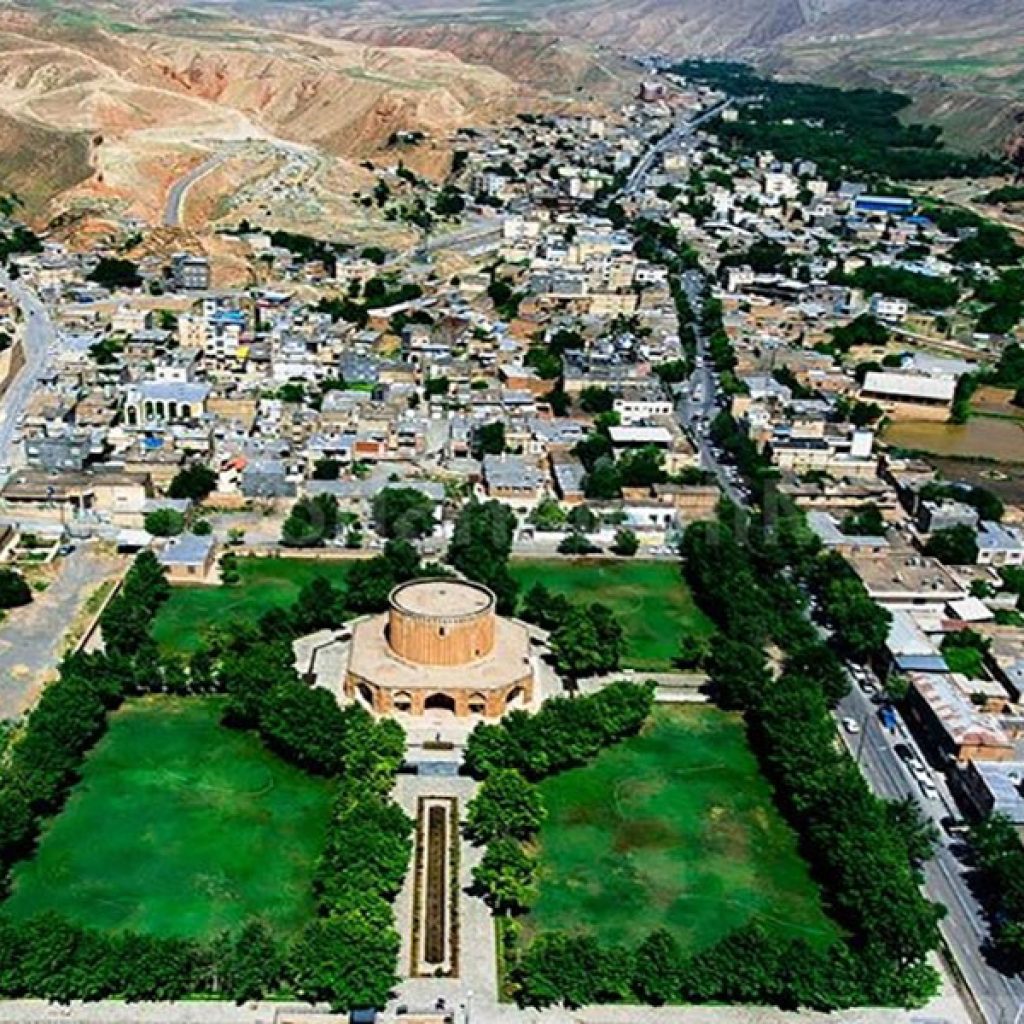
Kalat-e-Naderi is a historic fortified area located about 150 kilometers north of Mashhad, surrounded by steep cliffs and dramatic mountain landscapes. Nader Shah Afshar recognized the strategic importance of Kalat and strengthened its fortifications and built several structures there during his reign. The most famous monument in the area is Khurshid Palace, also known as the Sun Palace, which was commissioned by Nader Shah in the 18th century.
Built as a royal residence and treasury, Khurshid Palace is an imposing octagonal structure surrounded by a garden. The building originally rose three stories and combined Iranian architectural traditions with influences from Mughal India. Its exterior, central cylindrical tower, decorative brickwork, paintings, and stucco ornamentation make it one of the most distinctive examples of Afsharid architecture in Iran. Construction continued during Nader Shah’s reign but was left unfinished after his death in 1747. Today, the palace is the best-known historical monument of Kalat and an important destination for visitors exploring the history and landscapes of northeastern Iran.
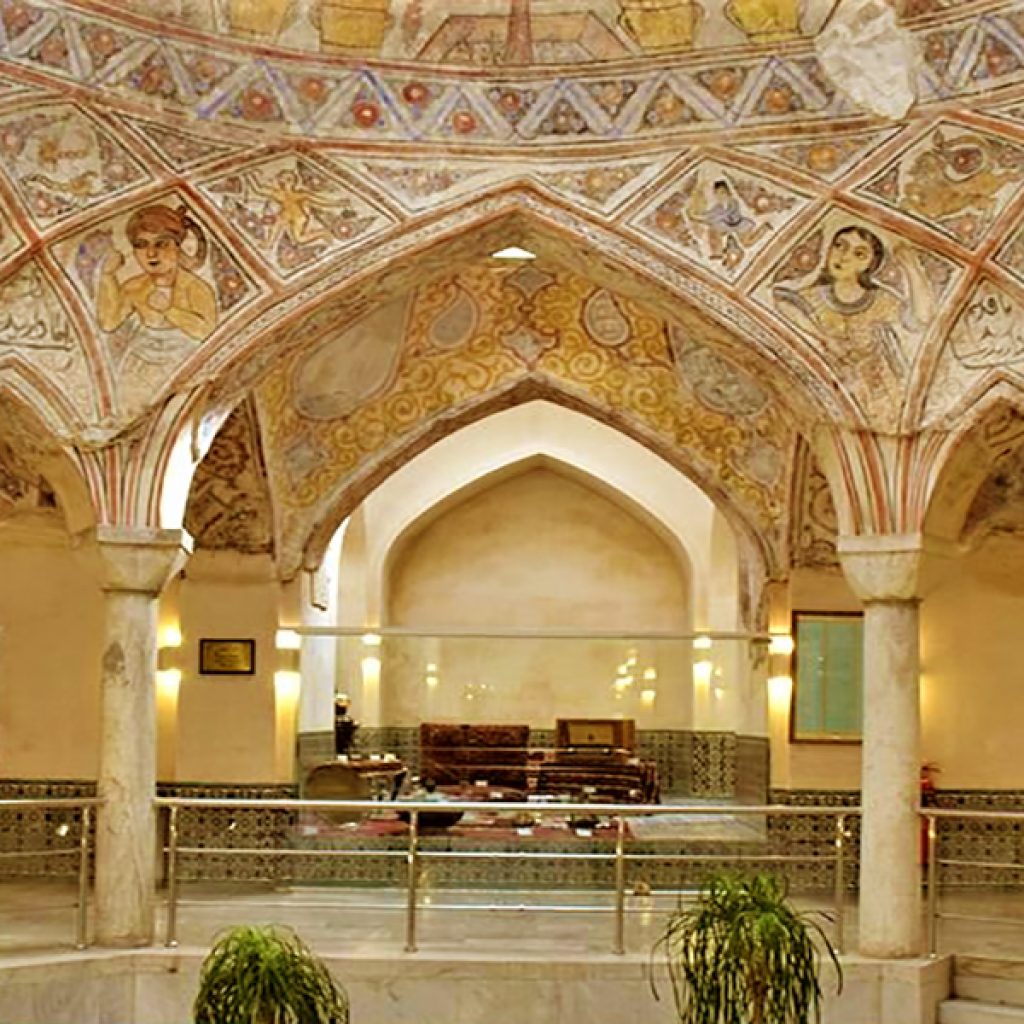
Mahdi Gholi Beyk Historical Bath is a Safavid-era bathhouse located near the Imam Reza Holy Shrine in the historic center of Mashhad. Built in 1615 during the reign of Shah Abbas I, the bathhouse was endowed by Mehdi Gholi Beyk, the head of the royal stables, and placed under the administration of the shrine. The building features the traditional spaces of a Persian bathhouse, including a changing room, intermediate areas, and a hot bathing chamber, with domed ceilings supported by columns and decorated with tilework and painted plasterwork. Some of the decorative paintings depict scenes from the Shahnameh, traditional life, and the history of Mashhad. After extensive restoration, the bathhouse was converted into the Anthropology Museum of Mashhad, where visitors can see traditional bathing objects, household items, and historical photographs.
Mashhad Botanical Garden is a 25-hectare botanical garden in Mashhad, combining botanical collections with landscape design and educational facilities. Officially opened in 2013, the garden was developed to conserve plant diversity, support botanical research and education, and provide a space for visitors to enjoy nature.
The garden contains a variety of specialized collections, including medicinal and aromatic plants, roses, native Iranian fruit trees, plants from Iran and Turan, Central Asian flora, and systematic plant collections. Its landscaped gardens, seasonal flowers, greenhouses, and walking paths make it a pleasant place to explore Iran’s diverse plant life while learning about the country’s botanical heritage.
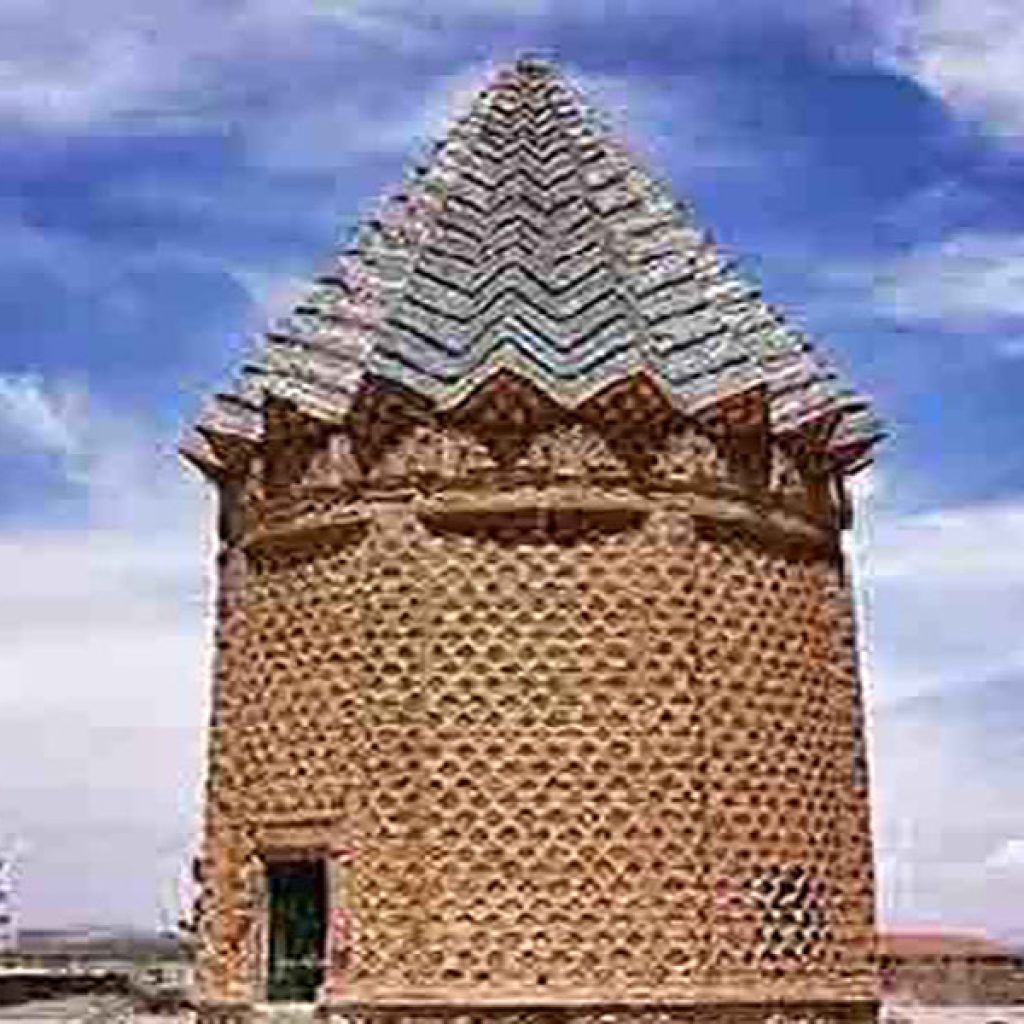
Akhangan Tower, also known as Mil-e Akhangan, is a historic tomb tower located near Akhangan Village, about 22 kilometers north of Mashhad. The brick structure is generally attributed to the Timurid period and stands approximately 17 meters high. Its exterior has an unusual rounded form with eight projecting half-columns, while the interior follows an octagonal plan. The tower is crowned by a distinctive conical dome decorated with turquoise and Persian blue tiles. Although the identity of the person buried in the tower remains unknown, the monument is considered an important example of historic funerary architecture in the Mashhad region and is registered as a national heritage site of Iran.
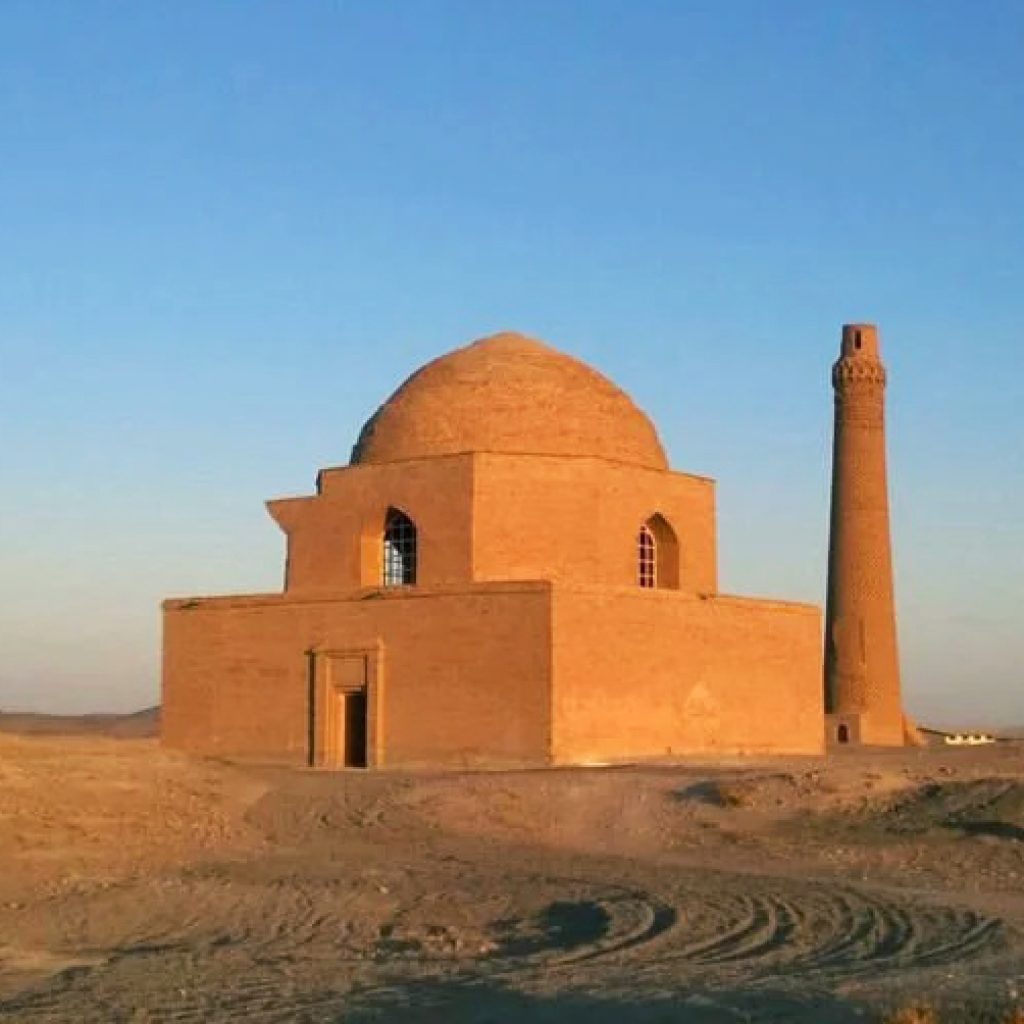
The Tomb of Arsalan Jazeb and Ayaz Minaret are part of the historic Sangbast site, located about 40 kilometers south of Mashhad along the Mashhad–Fariman road. Arsalan Jazeb was the governor of Tus during the reign of Sultan Mahmud of Ghazni and is believed to have been buried here in the early 11th century. His brick mausoleum has a square plan that transitions into an octagonal drum beneath a low dome and features Kufic inscriptions and decorative brickwork.
The nearby Ayaz Minaret is another surviving monument from the Ghaznavid period. Built of brick, the minaret is associated with the historic caravan route that passed through Sangbast and is believed to have served both religious and practical purposes. Together, the tomb and minaret provide an important glimpse into the early Islamic architecture of Khorasan.
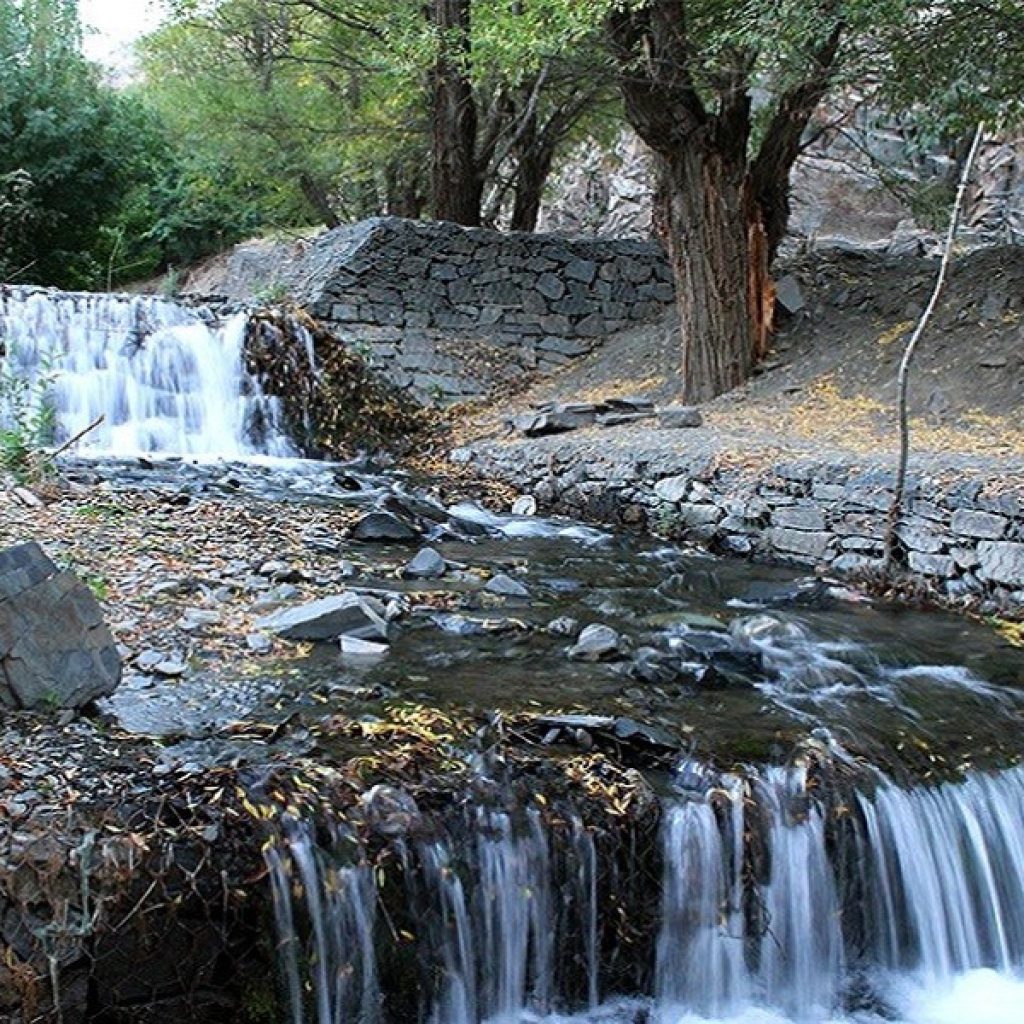
Torghabeh and Shandiz are two of the most popular countryside destinations near Mashhad, located in the mountainous foothills of the Binalud range. Known for their pleasant climate, green valleys, gardens, streams, and scenic landscapes, they offer a refreshing escape from the busy city, particularly during the warmer months.
Torghabeh is known for its gardens, riverside scenery, traditional and modern restaurants, and outdoor activities such as walking and cycling. The surrounding area also includes attractions such as Chalidareh Recreation Complex and several picturesque villages.
Shandiz is another popular mountain destination, known for its lush gardens, springs, scenic valleys, and restaurants serving traditional local cuisine. Together, Torghabeh and Shandiz offer visitors an opportunity to experience the natural landscapes, local food, and relaxed countryside atmosphere of the Mashhad region.
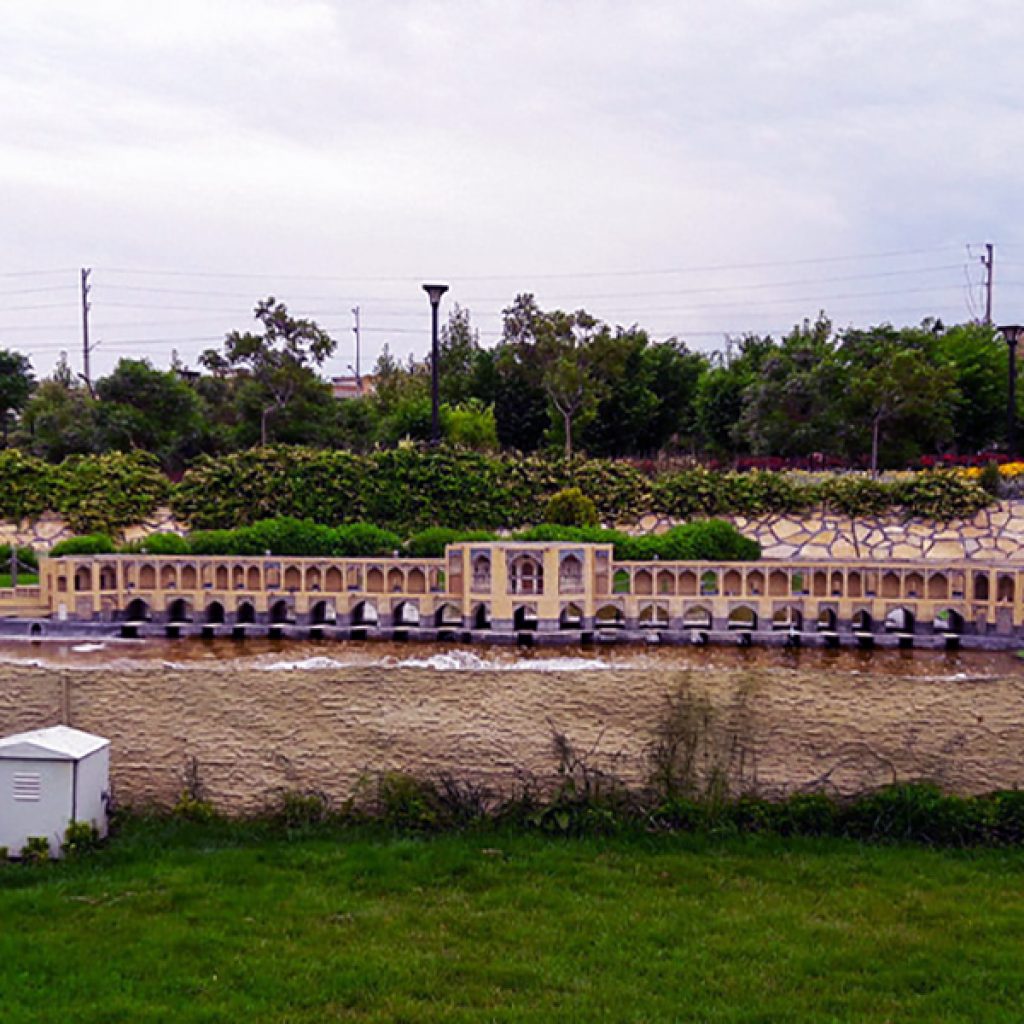
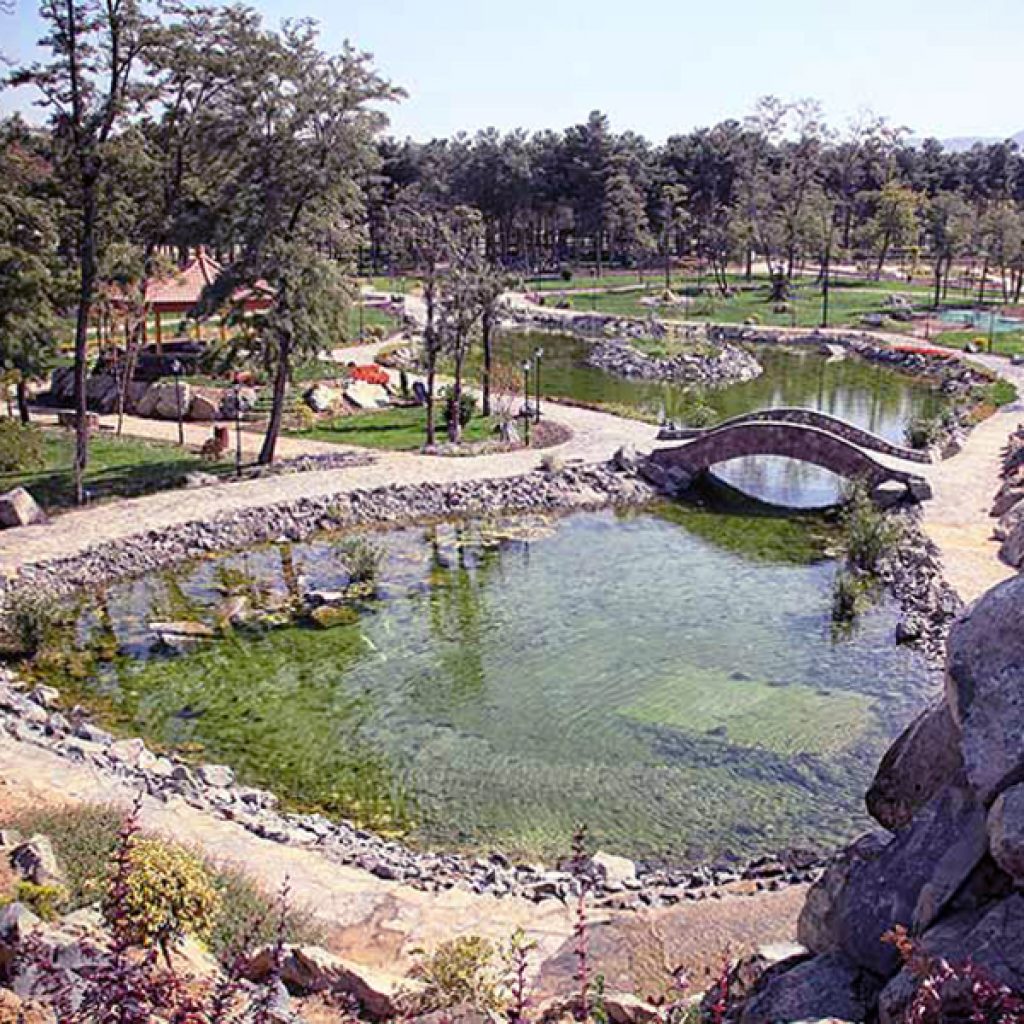
Mashhad Miniature Park is a themed recreational park in the west of Mashhad that offers visitors a miniature journey through Iran’s cultural and architectural heritage. Opened in 2016, the park was designed as a small-scale representation of Iran, with models of famous historical monuments, buildings, and landmarks from different parts of the country.
Among the miniature attractions displayed in the park are Persepolis, Ferdowsi’s Tomb, Khaju Bridge, Kandovan Village, Shazdeh Garden, the Arg of Bam, and several landmarks from Mashhad and other Iranian cities. The park also features landscaped areas, walking paths, a small lake, and a miniature railway, making it a pleasant recreational destination for families and visitors interested in seeing representations of Iran’s diverse heritage in one place.
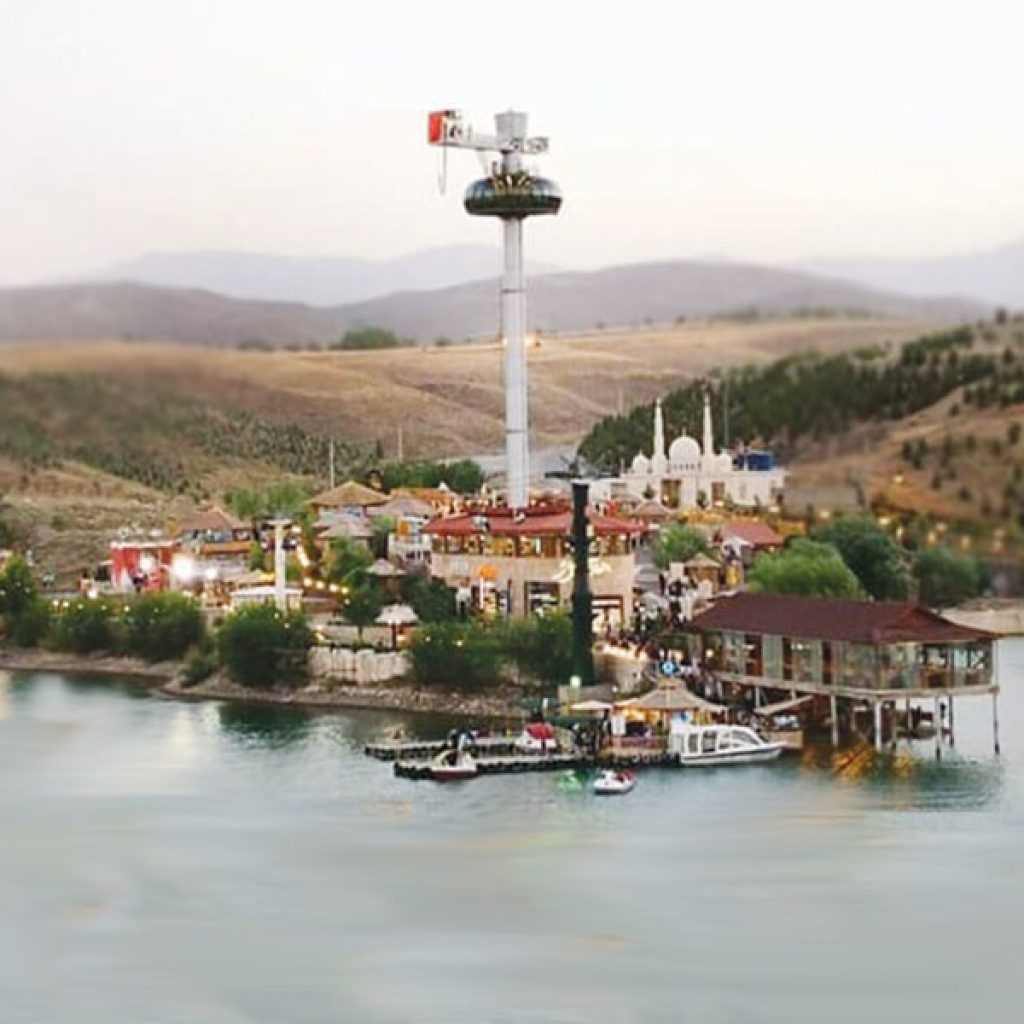
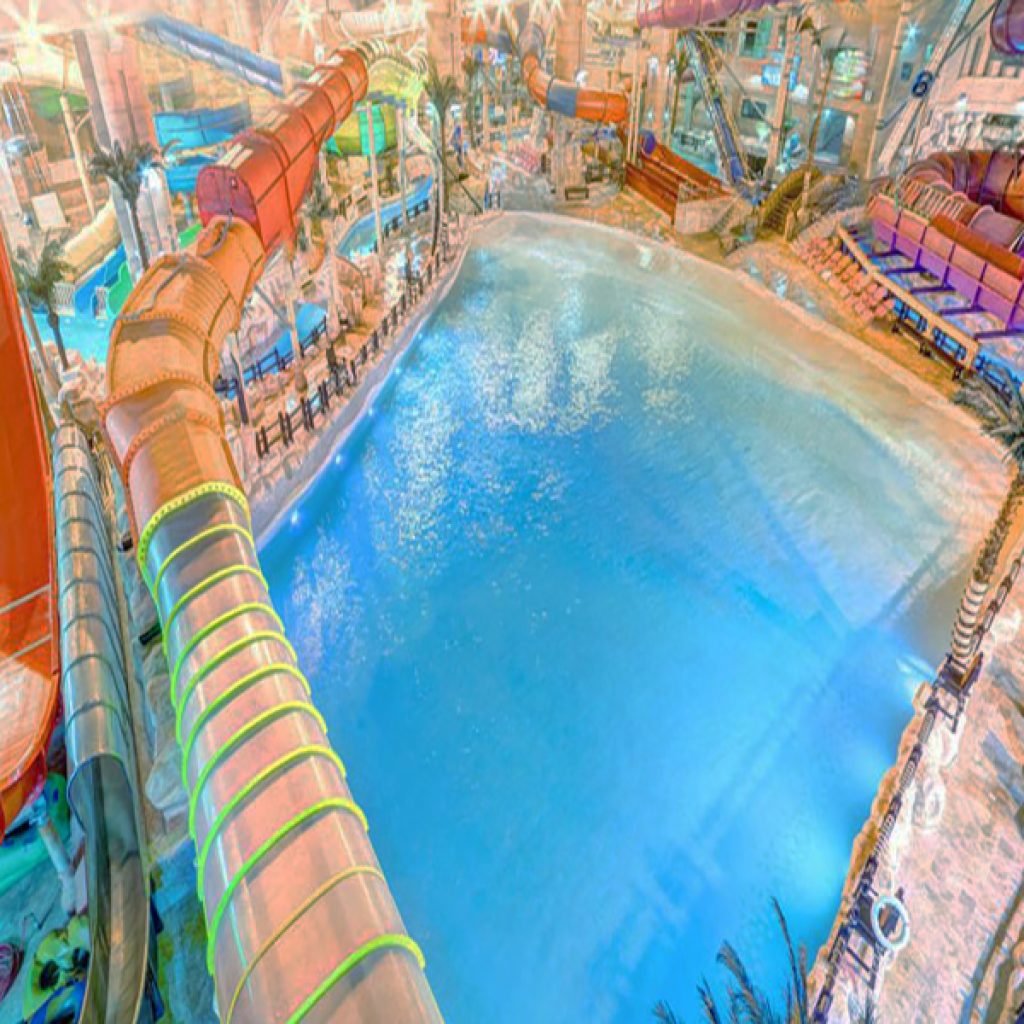
Mashhad Aqua Parks Mashhad is home to several large indoor water parks, offering a variety of recreational activities for visitors looking for entertainment beyond the city’s religious and historical attractions. Among the best-known are Water Waves Land, Iranian Water Park, Aftab Coastal Water Park, and Waves of Fury, located in different parts of Mashhad and its surrounding areas.
These modern recreational complexes offer facilities such as water slides, wave pools, lazy and fast-flowing rivers, swimming pools, saunas, jacuzzis, and other entertainment options. Some also provide separate facilities and sessions for women and men. With their wide range of water-based activities and indoor environments, Mashhad’s aqua parks can be an enjoyable option for families and visitors, particularly during hot summer days.
Kooh Sangi Park is one of the oldest and most popular recreational areas in Mashhad, located in the southwestern part of the city. The park takes its name from the two rocky hills that form its most distinctive natural feature and offer views over Mashhad and the surrounding landscape.
Once a natural countryside retreat known for its mild climate, gardens, streams, and rocky hills, Kooh Sangi gradually developed into a modern urban park during the 20th century. Today, the park combines green spaces, water features, walking paths, recreational facilities, restaurants, and cafés.
The Great Khorasan Museum is also located within the Kooh Sangi complex, adding a cultural and historical dimension to the park. With its combination of natural scenery, recreational facilities, and cultural attractions, Kooh Sangi is a pleasant place to experience a different side of Mashhad beyond its religious landmarks.
Kang Village is a historic mountain village located in the Binalud Mountains, about 30 kilometers west of Mashhad. Built along the steep slopes of the mountains, the village is known for its distinctive stepped architecture, with houses arranged one above another so that the roof of one house may serve as a courtyard or passageway for the house above it.
The village is surrounded by valleys, orchards, streams, and mountain landscapes, giving Kang a pleasant natural setting. Its traditional stone and adobe houses, narrow paths, stepped layout, and rural atmosphere offer visitors an opportunity to experience a different side of the Mashhad region away from the city.
Kang is particularly attractive in spring and summer, when the surrounding landscape is green and the mountain climate is cooler. The village is also a popular destination for hiking and nature trips around Mashhad.
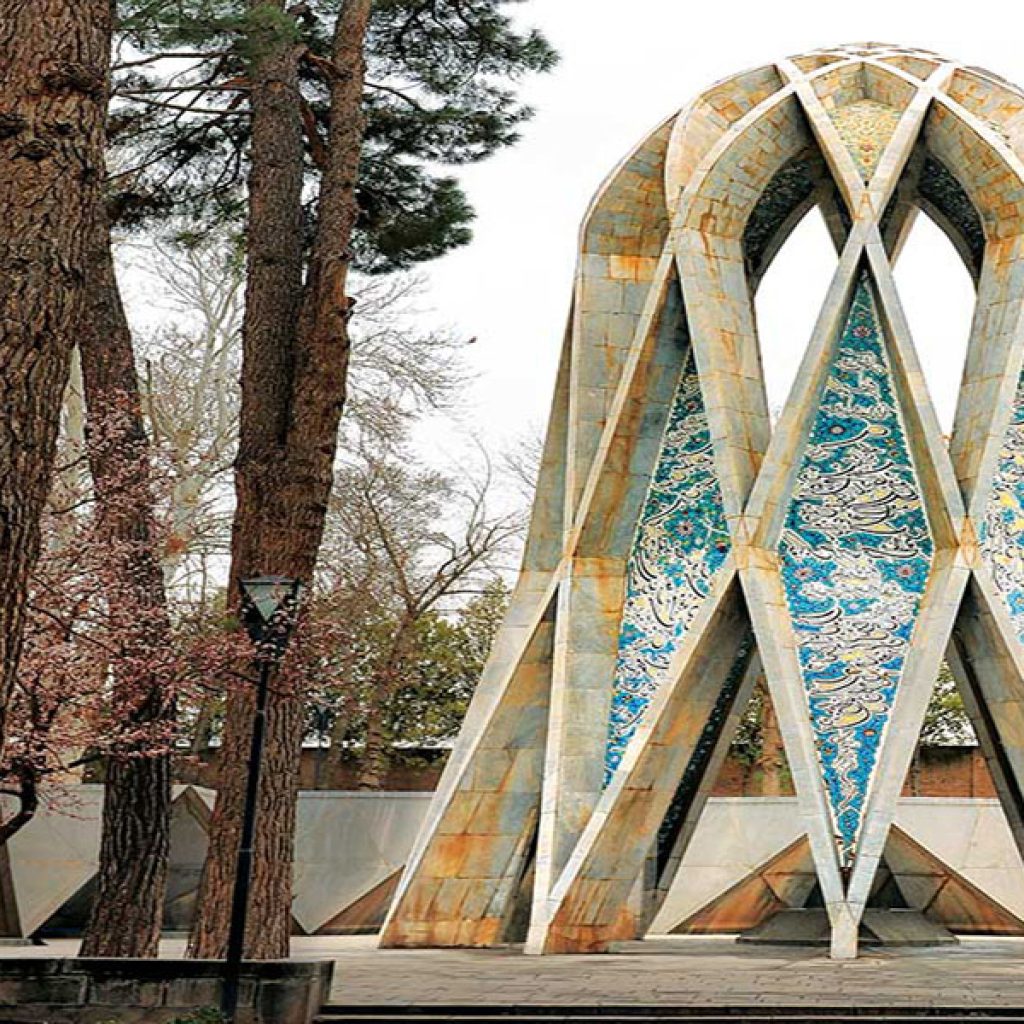
The Mausoleum of Omar Khayyam is located in Nishapur, the birthplace and burial place of the celebrated Persian poet, mathematician, astronomer, and philosopher Omar Khayyam. The present mausoleum was designed by the renowned Iranian architect Houshang Seyhoun and completed in 1963. Its striking geometric structure consists of intersecting concrete ribs that form a distinctive star-shaped design, reflecting Khayyam’s contributions to mathematics and astronomy.
The mausoleum stands within a beautifully landscaped garden that also includes the Omar Khayyam Museum. As one of the best-known examples of modern Iranian architecture, the monument has become an important symbol of Nishapur and a popular destination for visitors interested in Persian literature, science, and architecture.
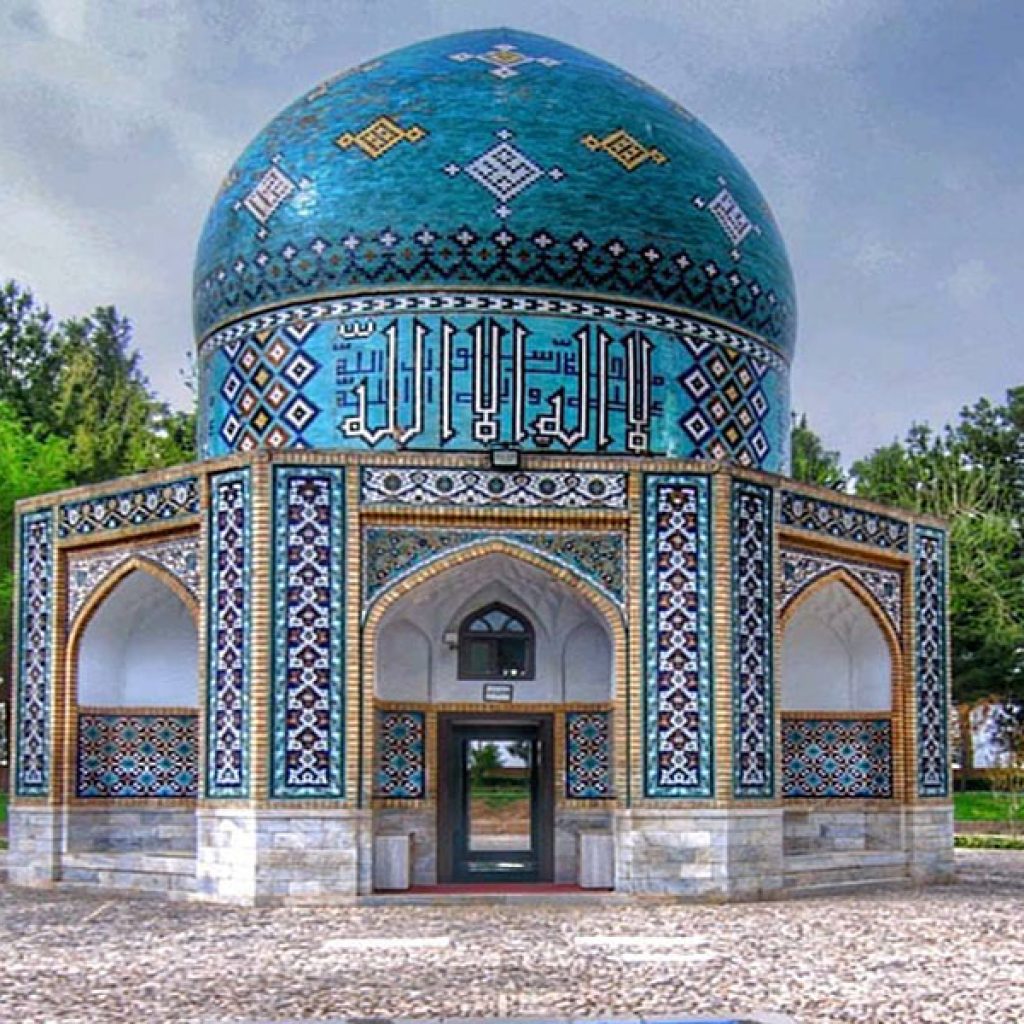
The Mausoleum of Attar of Nishapur is located in a peaceful garden about 6 kilometers west of Nishapur. It commemorates Farid al-Din Attar, the celebrated Persian poet, Sufi mystic, and author of works such as The Conference of the Birds and Tadhkirat al-Awliya. Attar was born and died in Nishapur and is regarded as one of the most influential figures in Persian mystical literature.
The present mausoleum dates from the Timurid period and was built by order of Ali-Shir Nava’i in the 15th century. The octagonal structure is crowned by a distinctive tiled dome and decorated with colorful tilework and carved details. The complex also contains the tomb of the renowned Iranian painter Kamal-ol-Molk, making it an important cultural destination for visitors interested in Persian literature, art, and history.
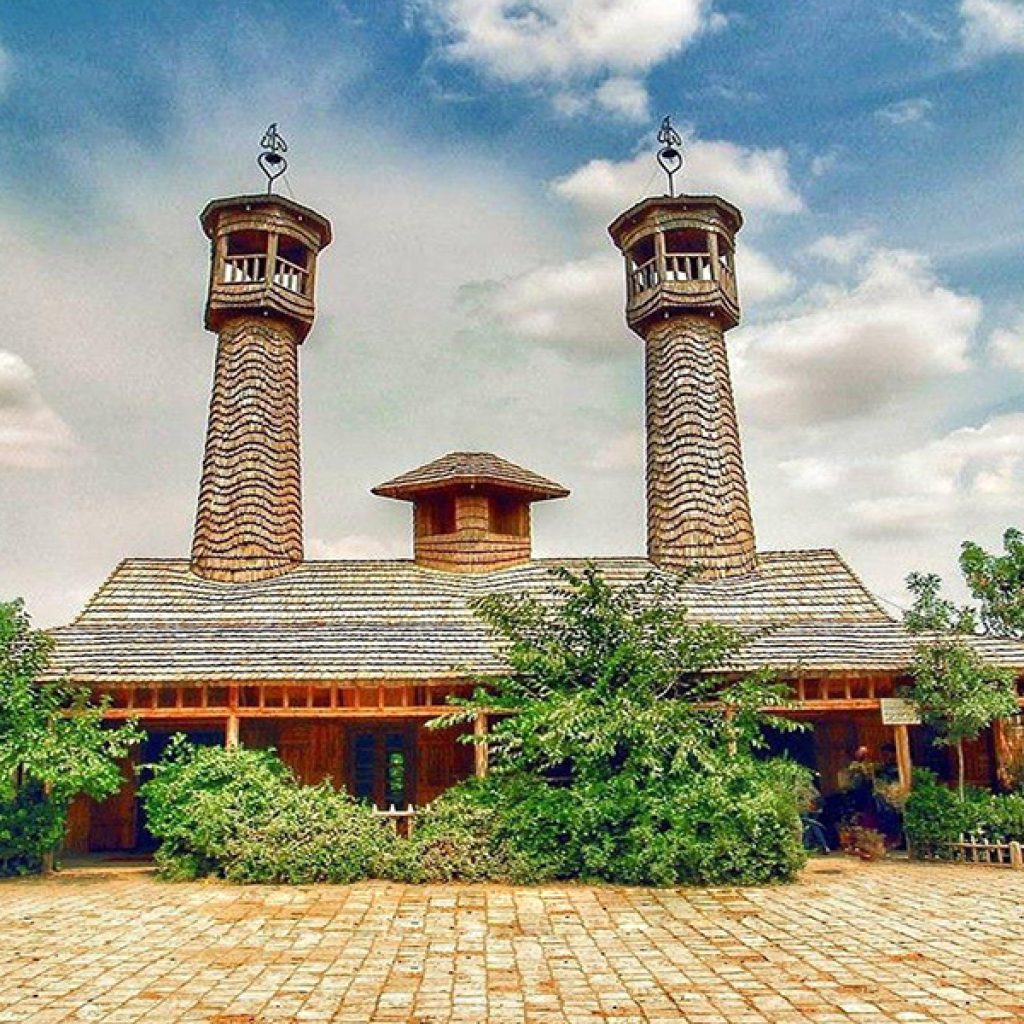
Nishapur Wooden Mosque is a distinctive modern mosque located in the Wooden Village, southeast of Nishapur. The present mosque was designed and built by Iranian architect and engineer Hamid Mojtahedi and completed in 2000, replacing an earlier mosque that had fallen into disrepair. The building is constructed almost entirely of wood and forms the centerpiece of the Wooden Village complex.
The mosque has a distinctive architectural design, with a pitched roof shaped like an inverted boat and two wooden minarets rising above the structure. Its innovative structural system was designed to withstand the earthquakes common in the region, while the extensive use of wood gives the building a warm and unusual character. The surrounding Wooden Village includes other wooden buildings, gardens, and visitor facilities, making the mosque part of a unique architectural and recreational destination near Nishapur.
Sheikh Ahmad-e Jami Mausoleum Complex is a remarkable historical and religious complex in Torbat-e Jam, in Razavi Khorasan Province, about 165 kilometers east of Mashhad. It is centered around the tomb of Sheikh Ahmad-e Jami, a renowned Persian Sufi mystic, scholar, and poet who lived from 1048 to 1141.
The complex developed gradually around Sheikh Ahmad’s tomb and includes a collection of mosques, madrasas, khanqahs, domed chambers, iwans, and other religious buildings constructed during different historical periods. Among its most notable features is the monumental iwan and the central domed chamber, together with the Kermani Mosque and other historic structures surrounding the large central courtyard.
The architecture of the complex reflects the development of Islamic and Sufi architecture in Khorasan over several centuries, with rich brickwork, stucco decoration, inscriptions, and distinctive domes and iwans. Sheikh Ahmad-e Jami Khaneghah and Mausoleum Complex is currently included on Iran’s UNESCO World Heritage Tentative List and is recognized for its outstanding architectural and cultural significance.
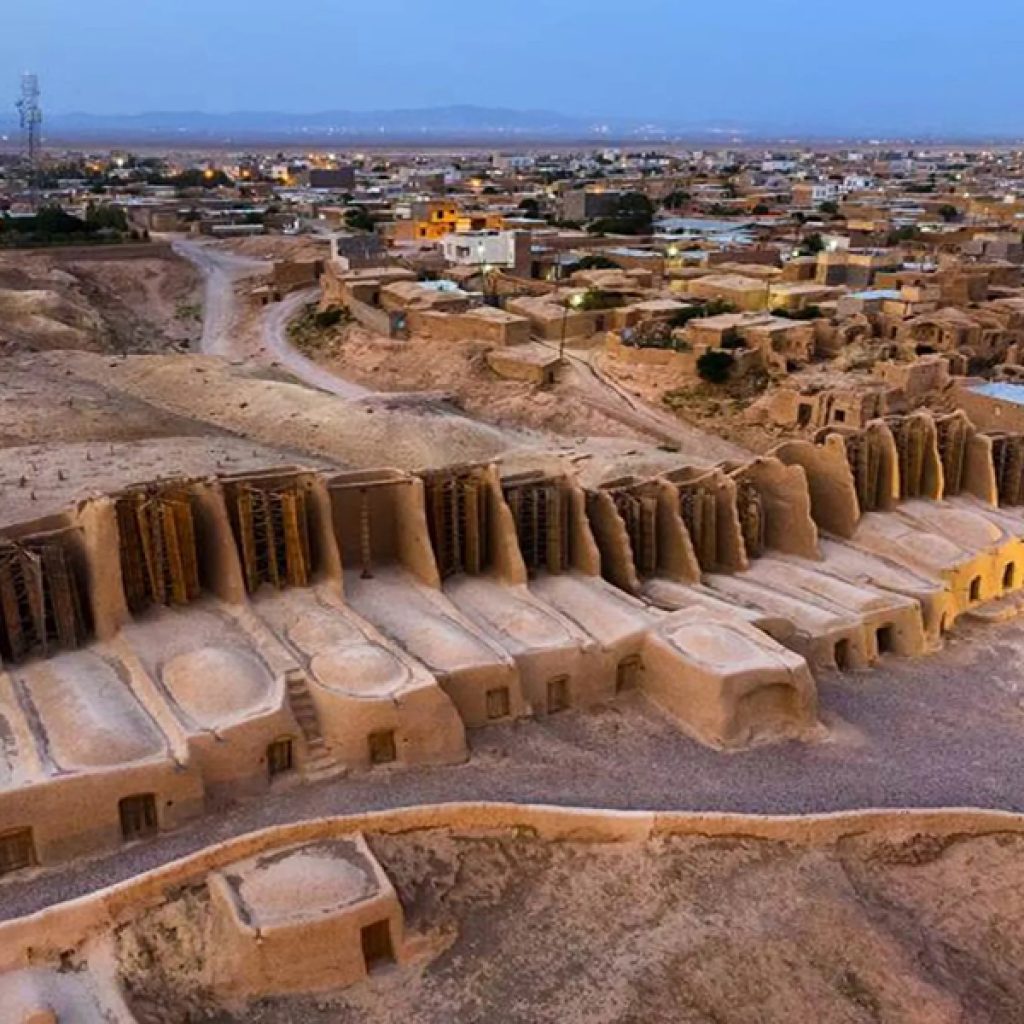
Nashtifan Windmills, locally known as Asbads, are a remarkable group of traditional vertical-axis windmills in Nashtifan, in Khaf County of Razavi Khorasan Province. Built to harness the powerful seasonal winds known as the “120-day winds,” these windmills used wind energy to grind grain and played an important role in the traditional economy and daily life of communities in eastern Iran.
The Asbads are constructed mainly from locally available materials such as mud brick, wood, and clay. Their distinctive design directs the strong winds through openings in the upper part of the structure, turning wooden sails connected to a vertical shaft and millstones below. This ingenious system represents a remarkable adaptation of architecture and technology to the harsh, windy environment of eastern Iran.
Nashtifan is one of the best-known surviving groups of Iranian Asbads, with a number of the historic windmills still standing and some continuing to demonstrate their traditional mechanism. The Asbads of Iran are included on UNESCO’s World Heritage Tentative List, recognized for their architectural, technological, and environmental significance as an early example of using renewable wind energy.